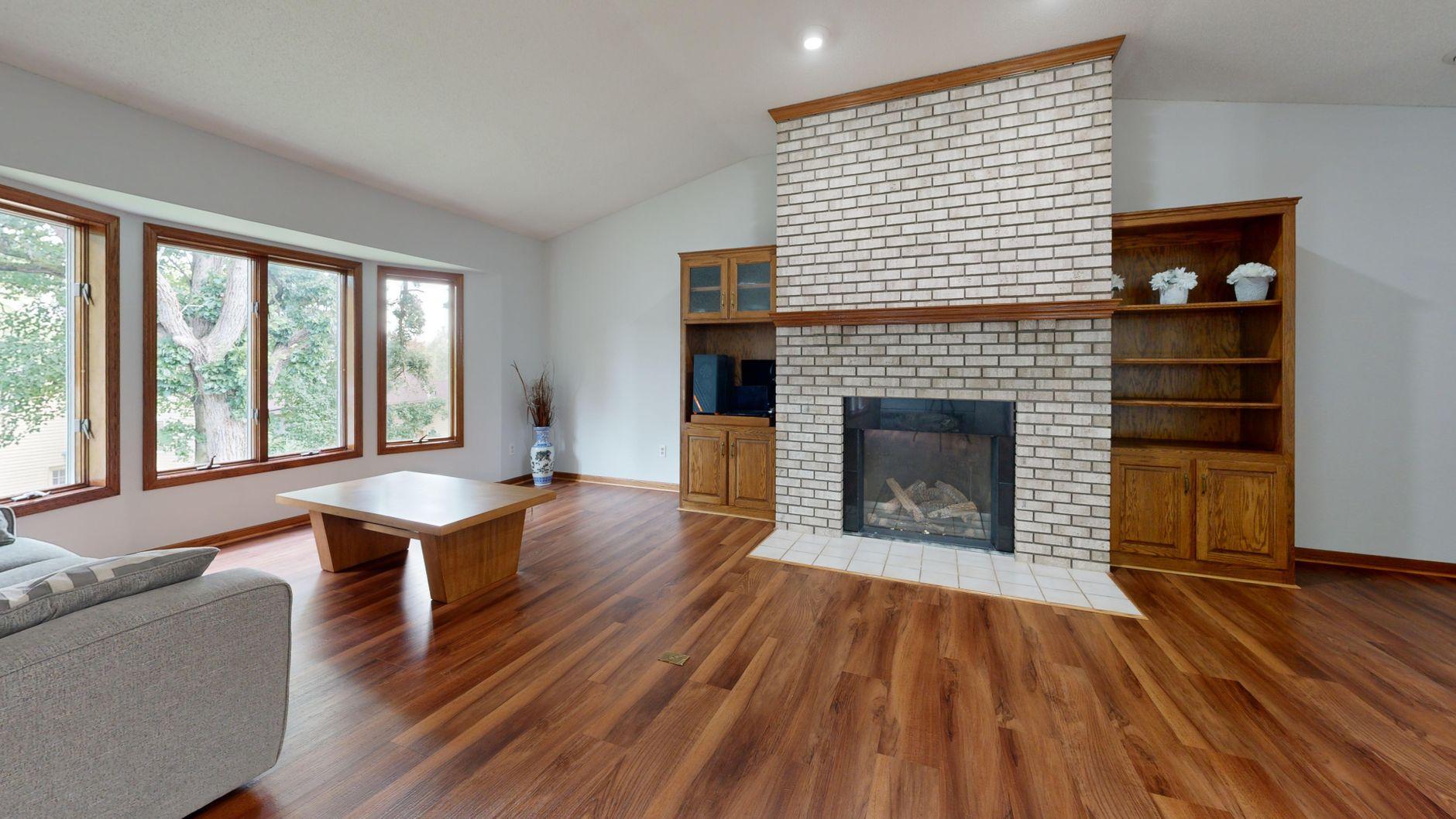
The flue is still part of a gas fire
Owners switching to gas in Laguna Hills often assume the old flue no longer matters. Wood is gone, so there is no creosote to worry about. That is half right. Gas burns cleaner, but its exhaust is hot, wet and full of carbon monoxide, and it still has to leave the house through something. Whether that something is the old clay flue or a new metal liner depends on which gas option you choose and what shape the flue is in.
Calvert Chimney Services fits chimney liners as part of many conversions across south Orange County. This post covers when a liner is part of the job, what kinds we use, and what decides the price.
When a liner is needed
Log set in a cracked flue. A vented log set sends its exhaust up the existing flue. If the camera shows cracked or missing tiles, gaps at the joints or a flue with no tile at all, the exhaust can seep into the brick and the framing around it. The fix is a liner before the logs go in.
Sealed insert. An insert always gets its own vent, which works as a liner. Most use two flexible pipes or one pipe inside another, run from the top of the unit to a cap at the top of the stack. The old flue just becomes the chase they run through.
Gas line to an old wood flue sized for a big fire. A large masonry flue built for wood can be too big for the smaller, cooler exhaust of a gas fire. The gas cools on its way up, water condenses on the tile and the draft weakens. A smaller liner keeps the exhaust warm and moving.
Sealed unit in a new wall. No liner is needed in the old chimney, because the unit vents straight outside. If the old chimney is left in place and unused, it still needs a cap to keep rain out.
Why condensation is the quiet problem
Wood smoke leaves soot. Gas exhaust leaves water. On a cold night in an oversized clay flue, that water collects on the tile, mixes with what is left of decades of wood use, and slowly eats the mortar joints. We see this in Laguna Hills homes that had a log set put in twenty years ago with no change to the flue: flaking tile near the top, white crust on the brick, rust on the old damper.
The camera picks this up early. A Level 2 inspection at $415 records the inside of the flue from the firebox to the top, and the report says whether the tile can carry gas exhaust as it is.
Liner types we fit
- Flexible stainless. The most common for log sets and for flues with a bend or offset. It is fed down from the top and joined to a cap.
- Rigid stainless sections. Used for straight flues where a smooth wall is wanted.
- Insert vent kits. The pipes the insert maker lists for its unit, nothing else. Using a kit other than the listed one is not allowed under the installation rules.
On a masonry chimney in a home from the 1960s or 1970s, a liner can also bring a flue with no tile, or one damaged in a past quake, back into use for gas.
What decides the price
A liner has no single price on our list because no two chimneys take the same amount of pipe or the same work. These are the things that make up the figure:
- the length from the firebox to the top of the stack
- the diameter the appliance calls for
- bends or offsets that need flexible pipe
- whether the smoke chamber or damper frame has to be opened up for the pipe to pass
- the state of the crown and whether a new cap is needed; a cap is quoted after we measure
- insulation, where the clearance to wood framing calls for it
When the liner is part of an insert job, it is already inside the $2,950 to $5,950 we charge for the insert. When it is going in for a log set, it is priced on its own, on paper, once we have run the camera.
Ask for a liner figure
Use the form to say what gas option you plan and what the last chimney report said about the flue. We will come out with the camera and send a written figure for the liner and anything around it.
What happens on the day
The liner goes in from the roof. We protect the hearth and the room, open the top of the chimney, run the liner down and connect it at the bottom. At the top it is sealed under a new or refitted cap. If a permit is needed for the gas work that goes with it, we book the city visit at the stage the inspector asks to see.
Afterward, we light the appliance, watch the flame and check the draft and the carbon monoxide level at the opening. You get photos of the liner at the top and the bottom with the paperwork.
When the flue cannot be saved
Sometimes the chimney itself is the problem. A stack that has shifted, brick that is falling apart at the top, or a quake crack running through the flue walls can make lining pointless until the masonry is dealt with. The report says so, and we can quote the masonry and the liner together. In some houses a sealed wall unit, which needs no chimney at all, ends up the simpler route. The comparison of gas options and our insert cost guide help with that decision.
If you are not sure whether your flue can carry a gas fire, the contact page is where to ask for a look.
Want Figures for Your Own Fireplace?
Calvert Chimney Services measures the opening, checks the flue and writes up each gas option with its own price. Work covers Laguna Hills and the cities on our areas page, and nothing starts until you have read the quote.