Where a quote for an insert goes
Calvert Chimney Services fits sealed gas inserts in Laguna Hills for $2,950 to $5,950, set in place, vented and burning. That band is wide on purpose. The steel box is only one part of the bill. The rest is the route the exhaust takes up the old chimney, the route the gas takes to the burner, and how much of the existing fireplace has to change so both can get through.
Owners often ask which end of the band their living room will land on before anyone has measured. We can usually give a fair guess on the phone once we know the age of the house and what burns there now. The written figure comes after we have seen the opening and looked up the flue. This post lays out the parts that make up that figure, in the order they appear on a Calvert quote, so you can read it line by line instead of taking one number on faith.
Part one: the firebox you choose
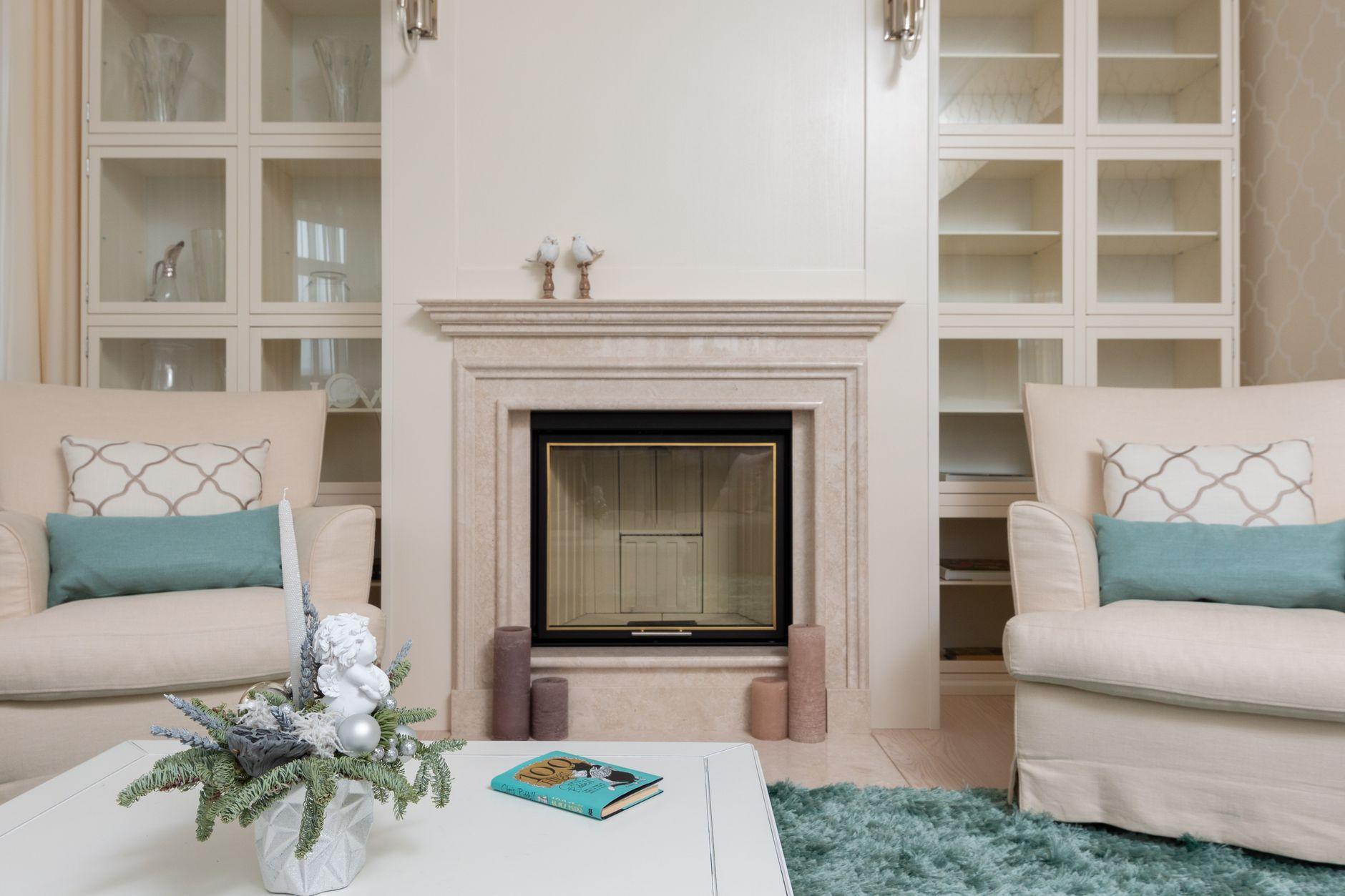
An insert is a closed steel box with a glass face that slides into a masonry opening. It turns a fireplace that loses most of its heat up the chimney into a heater that warms the room. Units sized for a small, shallow opening sit near the bottom of our band. Wide units with a larger burner, a fan and a decorative front sit near the top.
Controls move the price less than people expect. A plain wall switch costs least. A remote with a thermostat costs a little more and is what most owners in Laguna Hills pick, because it lets the unit cycle like a furnace on a cold January evening. The finish around the glass, from a slim black frame to a wide cast panel, is mostly a matter of taste.
What the opening allows decides more than taste does. Every insert has a minimum width, height and depth. A firebox that is narrow at the back or has a sloped rear wall can rule out a larger model before color or style even comes up.
Part two: the vent up the old flue
A sealed insert does not use the open masonry flue the way a wood fire did. It needs its own vent. On most of our jobs that is a pair of flexible pipes, one for fresh air coming down and one for exhaust going up, joined to a cap at the top of the stack. Some models use a single pipe with one tube inside another.
The vent kit is priced by length. A one-story ranch on the flats near Moulton Parkway has a short run. A split-level house in the hills, where the chimney climbs past a second floor, can need twice as much pipe. The top of the chimney also has to hold the new cap firmly, so a crumbling crown or a rusted old cap adds to the job. Our post on crown and cap work before gas covers those repairs.
Inside the fireplace, an old cast iron damper frame sometimes pinches the throat too tight for two pipes. Trimming the frame is common and fits inside our band. Rebuilding a smoke chamber is not, and gets its own line on the quote.
Part three: the gas supply
Plenty of fireplaces built here in the 1970s and 1980s came with a log lighter, a small pipe through the side of the firebox meant to start a wood fire. That pipe may be too small for an insert burner, or end in the wrong spot. Sometimes it can be extended. Sometimes a new line has to run from the meter or a nearby branch.
That run is the largest swing on most quotes after the unit itself. Pipe through a crawl space or along an attic is simpler than pipe that has to cross a slab foundation. New gas work goes through the city, which we explain in permits for a wood to gas switch.
Part four: trim and surround
Every insert comes with a surround panel that covers the gap between the steel box and the brick or tile. That panel is in the price. If the brick face around it is dated or cracked and you want it refaced while the fireplace is torn up, that becomes fireplace remodel work with its own quote. Doing both at once saves a second round of drop cloths.
What can push a job past the band
The band covers the insert, the vent, normal fitting and the trim. These items sit outside it and are priced on their own once we see them:
- a new gas line longer than a short extension
- a crown or chimney top that cannot hold a cap
- a liner problem in an old clay flue the camera turns up
- a factory-built metal fireplace that the insert maker does not list for its unit
The last point catches people out. Some Laguna Hills homes have a prefab fireplace rather than brick. An insert can only go into one of those if the insert maker says so in writing. When it does not, the choice becomes a different kind of gas appliance, which our comparison of logs, inserts and sealed units walks through.
The inspection that comes first
We do not set an insert into a flue we have not looked inside. If your chimney has not had a camera through it, we start with a Level 2 inspection at $415. It shows whether the flue is straight, clear and sound enough to carry the vent, and it often settles the question of a new cap or crown before the quote is written. If the fireplace was swept and inspected recently, send us what you have and we will tell you whether it covers what we need.
For owners still burning wood, a sweep from $445 before the measuring visit is common, since nobody wants to fit a new unit into a flue lined with soot.
Get a figure for your fireplace
Use the form to give us the width of your firebox and the year the house went up, and we will book a measuring visit and send the insert quote on paper, broken into the parts above.
Other options worth pricing
If an insert is more heater than you want, a gas log set on an existing burner keeps the open look for less. If the fireplace is a prefab that cannot take an insert, a sealed unit built into a wall is the usual path, and those run $4,750 to $9,550 depending on where the vent can exit. Either way, the parts on the quote follow the same logic: the box, the air path, the gas, and the finish.
If an older insert is already in place and misbehaving, that is a gas fireplace repair visit, not a new install, and we will say so if a repair makes more sense than a replacement.
A fireplace you stopped using because of the smoke and the cleanup can become the warmest spot in the house. When you are ready to price yours, the contact page is where to start.
Want Figures for Your Own Fireplace?
Calvert Chimney Services measures the opening, checks the flue and writes up each gas option with its own price. Work covers Laguna Hills and the cities on our areas page, and nothing starts until you have read the quote.