The paperwork side of going gas
An owner in Laguna Hills who switches from wood to gas is changing more than the fire. A gas pipe is being run or altered, an appliance is being connected, and exhaust is being sent somewhere new. Those are the parts a city building department cares about. Before you sign for a conversion, it helps to know which pieces will need a permit, what the city inspector will look at, and which rules about burning and alarms come along with the work.
This is a plain summary from the side of Calvert Chimney Services, which handles these jobs across south Orange County. Each city keeps its own list and the final word is always the building department's. What follows is the pattern we see on our jobs.
Which pieces usually need a permit
The trigger is the gas and the venting, not the logs or the glass. In practice that sorts a conversion into three groups.
Most often permitted. A new gas line or a new shutoff valve at the fireplace. A sealed insert connected to gas and vented up the chimney. A sealed gas fireplace framed into a wall that never had one, with its vent through the siding or roof. Rebuilding or heavily altering the chimney itself.
Most often not. Setting a log set on a burner that is already connected to a working line and valve. Replacing a thermocouple, a pilot assembly or a glass gasket. Sweeping the flue. Swapping a cap for one of the same type.
Worth a question to the city. Reroofing around the chimney with new flashing. Changing a mantel or surround close to the firebox opening. Anything on a home inside an HOA that has its own approval step on top of the city's.
What the city inspector looks at
For an insert, the inspector usually wants to see the gas connection before it is hidden by the surround, and then the running unit at the end. They check that the pipe is the right size and material, that the shutoff valve is reachable, that the vent is the one the maker lists, and that clearances to the mantel and trim match the installation manual.
For a sealed unit in a new wall, there is often a framing look too, before the drywall closes in. The vent terminal outside gets checked for distance from windows, doors and the property line.
We schedule those visits around the job so the walls are not closed before the inspector has seen what needs seeing. When the final passes, you get a copy of the sign-off with your paperwork.
Burning rules that stay with the house
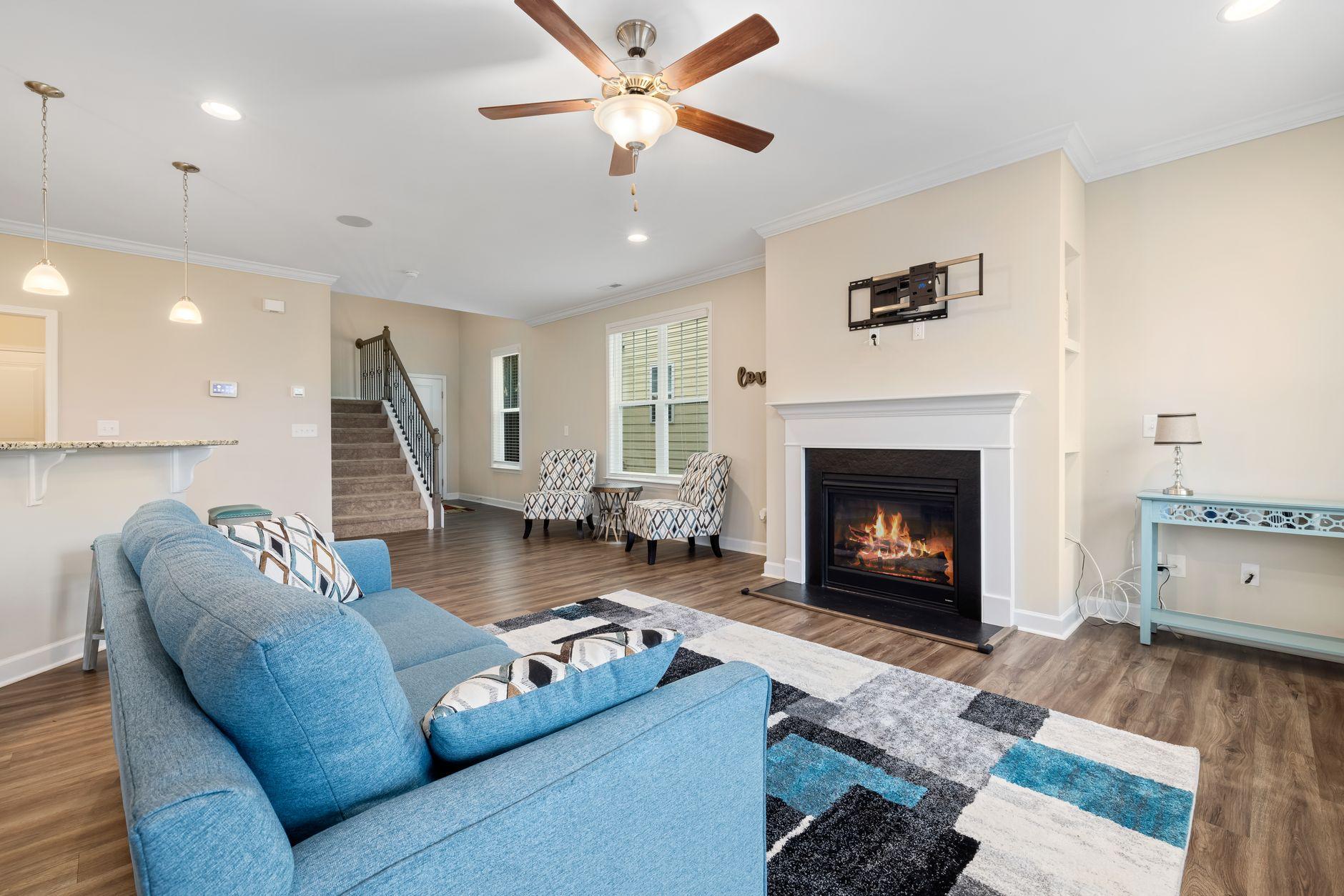
Laguna Hills falls under South Coast AQMD. Under Rule 445, that agency can declare winter days when burning wood indoors or out is not allowed, and it keeps wood-burning fireplaces out of most new construction. Gas fireplaces are exempt from those no-burn days. For many owners here, that exemption is the reason for the switch: the fireplace works on the evenings it is wanted most.
Going gas does not mean the old flue stops mattering. A log set still sends its exhaust up the masonry flue, and the district rules do not change that.
Carbon monoxide alarms
State law already asks homes that have a fuel-burning appliance or an attached garage to have carbon monoxide alarms. A house with gas heat or a gas water heater should have them already. A new gas fireplace is one more reason to check they are on each level and outside the bedrooms, and the city inspector may ask to see them during the final.
Unpermitted conversions you inherit
A lot of older gas logs in Laguna Hills went in long before anyone pulled a permit. That surfaces in a sale, when the buyer's side asks whether the work was signed off. If a Level 2 inspection at $415 finds a conversion with no record, the next step depends on what it shows. A sound line and a sound flue may only need the city to look. A valve buried behind the brick or logs in a cracked flue usually needs work first.
Our page on permits and code repairs lists the repairs we see most after a failed inspection, with Calvert prices where we have them.
What it costs, permit aside
The permit fee is set by the city and shown on our quote as its own line. Our own figures for the work are:
- sealed insert, set and vented in your current firebox: $2,950 to $5,950
- sealed unit framed into a new wall: $4,750 to $9,550
- new cap at the top of the flue: quoted after we measure
A log set has no fixed figure because sets vary so much. The gas run and any chimney repairs come on the same written quote, so you see the whole job before work begins.
Get a quote that names the permits
Tell us in the form which gas option you want and which city the house is in. We visit, measure, and send a quote that marks every item needing city approval.
If you are buying or selling
A sale changes the timing. A buyer may ask for proof that a conversion was signed off, and a seller who cannot show it may face a credit request. Our home sale page explains how we handle inspections for condos and houses changing hands, and the page for agents covers booking from their side.
Related reading
For the choice between the gas options, see gas logs, insert or sealed unit. For what to expect from whoever you hire, see hiring a gas fireplace installer.
If your switch needs a city sign-off, let us plan it in from day one. The contact page is the place to start.
Want Figures for Your Own Fireplace?
Calvert Chimney Services measures the opening, checks the flue and writes up each gas option with its own price. Work covers Laguna Hills and the cities on our areas page, and nothing starts until you have read the quote.